My Learning Portfolio EDCI - 336

Category: Weekly Blogs (Page 2 of 2)

Blog Post #3 Personal Digital Identity vs Professional Digital Identity

What digital platforms are students currently using to develop their professional network?

Students have become dependent on using digital platforms such as LinkedIn, blogs, forum chats, and webpages to develop their professional networks. PLNs can exist on any social media platform, but I think Instagram and Twitter are the most commonly used tools for students who are trying to expand their PLNs. These platforms are popular among students to keep up to date on news and information from people, businesses, and organizations that they follow. As a Co-op student, the Cooperative Education department at UVic encourages all the students in the program to use LinkedIn for your professional presence, Facebook for personal use and a blended personal/professional Twitter. The department does not suggest using Instagram for networking purposes but I am not really sure what their reasoning is. I personally think younger students are using Instagram much more than Facebook to connect personally.  

 What can you (as a student) consider to expand your professional learning network?

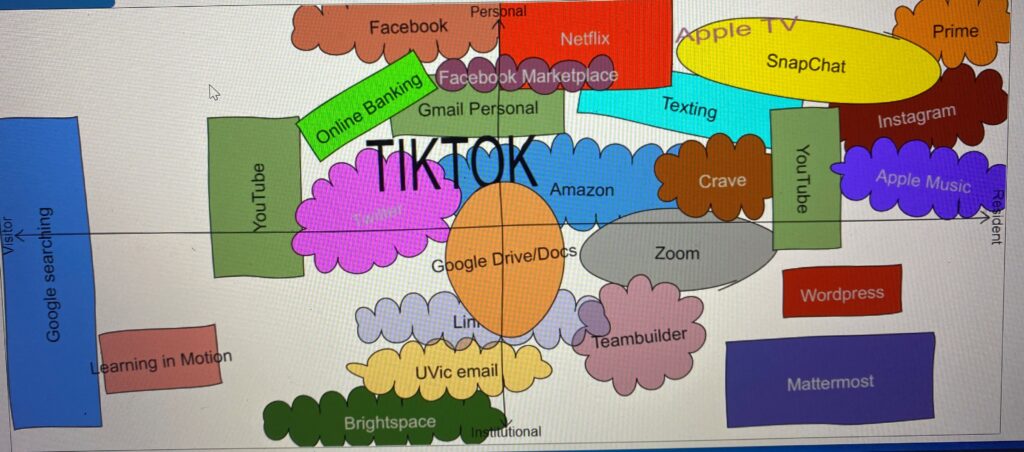
As a student, starting my professional career is something that is in the near future. To expand my professional learning network, it would be beneficial for me to build and improve my LinkedIn account as it is my only professional account. I made my account last year and I have been able to connect with people who I know and start building my own community. I could start changing my personal twitter account and making it more professionally focussed. I am not sure how easy this may be but I would need to go through my tweets and retweets and determine if it would be appropriate for an employer to view. After looking at Twitter from a professional viewpoint, I quickly realized that it was much more professional based than I thought. For example, a specific hashtag for a presentation can be tweeted to others to see who else is attending. You can also connect with other professionals around the world on a daily basis by following trending hashtags and topics within your industry. I could also expand my PLN by creating or building a personal brand. This would involve identifying two or three of my strengths or passions and focus my public online presence on these themes. This could be done with a personal website, or portfolio. I don’t use Facebook very much as you can see on my VR map. It doesn’t seem as professionally driven as LinkedIn, and many of my peers don’t use it to communicate to each other. I have always considered Facebook to be more of a social network to connect with friends so you can follow them but may be not to communicate regularly with.  I know there are a few applications on Facebook that can be beneficial. I have recently started searching on Facebook Groups to find relevant groups that potentially could help me connect with professionals in a variety of industries to share helpful links, news, and material.

 In your network, how can you create a digital identity/reputation?

I have been using social media for many years now and as I reflect on my digital identity/reputation, I can’t help but see how I have changed/grown as a person. I also wasn’t aware of my digital footprint until I started university. When I was younger,  I shared information and pictures freely online and I wasn’t concerned with them being permanent. In fact, I was happy that information could be easily and quickly shared by others. Personal information like texts, video, photos, my name, address, phone number, sites I visited, comments and ratings on blogs and other sites, and what others post about me were not a concern. Now, I am constantly reminding myself to only post things that I would want an employer to see. As a member of the varsity basketball team, everything I post is also a reflection of our program. I am also aware that the Athletic department uses a number of digital platforms to advertise and if photos are used of myself, my personal accounts are usually tagged. This is another reason why it is  important to keep a close eye on your social media accounts to make sure that your account hasn’t been hacked and your reputation could be jeopardized. Additionally, I have also learned that you need to be who you are. There is no advantage to exaggerating the truth so having a profile picture that looks like you, and a bio that is honest, accurate, and presents you in a positive way is important so it doesn’t come back to bite you. After looking at my VR map, it is apparent that I am a digital resident. There are positives and negatives to this but I have come to realize that my digital identity is always evolving.  After taking a look at how I use platforms, it has become pretty clear that I should try and have two separate digital identities, professional and personal. I think if I try to combine the two, it would be difficult to prevent employers from seeing who I was 5-10 years ago. Having said that, if my personal and professional accounts were separate, I would have to know everything I could on privacy settings so my digital identity doesn’t blow up in my face!

Consider what a local employer would do if you applied for a job with them – can they search the content, is it of benefit to the career path, does it hinder the opportunity of employment?

If I applied for a job and an employer was interested in finding out more about me, it would be easy for them to find my social media accounts but more difficult to view. The digital platform that would be at the forefront would be my Instagram and Facebook accounts but both are private. However, my Instagram profile has a link to my UVic basketball bio.  If an employer were to search images, they would be able to view close to 100 photos of me playing basketball at various stages of my life. When I started looking through all these images, I noticed there were two profile pictures that came up from when I was in high school. These profile pics were used for an app that was trending at the time called askfm. If an employer were to view the two photos, it would not affect their decision to hire me but I will try to have them removed in the meantime. My twitter account is not an issue because I don’t really tweet my thoughts very often. I do retweet but never anything that could be considered offensive. It would be safe to assume that the jobs I will be applying for will have something to do in the field of recreation and health. An employer would see that I am physically active, educated, social, and I give back to the community.  These are all things that make me who I am and for this reason, I would hope they would not hesitate to consider me for future job opportunities.


References:

“V&R Mapping.” David White, 13 Jan. 2020, daveowhite.com/vandr/vr-mapping/.

Wikipedia contributors. “Digital Visitor and Resident.” Wikipedia, 31 Dec. 2020, en.wikipedia.org/wiki/Digital_Visitor_and_Resident


Blog Post #2 Digital Identity

What Is A Digital Identity?

Digital identity can be defined as the online version of yourself and all your information and data specifically about you. Every interaction from what you’ve said, what others have said about you, where you’ve been, images you’re tagged in, personal information, social media profiles, and much more can be referred to as our digital footprint(Jawed, et al, 2019). Having said this, your digital identity can be personal or professional and both can differ from your real life identity. Social media allows people to post things so they can be seen how they want to be seen. For example, I have friends that are always posting their workouts on social media. For some, they are trying to portray someone who is active and physically fit when in truth, the workout lasted only 5 min.

 How Do Personal Versus Professional Approaches To Digital Identity Affect Social Media Use?

Your digital identity, personal or professional is complex and will affect how you use social media. Your personal digital identity affects your use of social media by focusing on your personal life and how you see yourself in society and how this was developed through social interaction. Your social media use will most likely be more for pleasure and you may be inclined to post pictures of what you do in your leisure time. You may feel more comfortable reaching out to people and connecting on a personal basis and sharing information more freely. This differs from your professional identity because your professional identity refers to who you are in your professional career. Your approach to social media use may be more serious and you may spend more time deciding what is appropriate to post. You may look at a picture and think about how other people may perceive you as a person before you post it. Another example of how your professional digital identity may affect your social media use is that you may only post things that are applicable to your profession. If you were a teacher, your professional identity may only be based on educational content and the things you post will most likely interest others with the same interests.

How Do Digital Identities Converge In Networked Publics – What Are The Impacts and/or Benefits?

Networked publics allow people to gather for social, cultural, and civic purposes and they help people connect with a world beyond their close friends and family(Boyd, 2010). On these networked publics, our personal and professional digital identities can sometimes converge. It used to be much easier to keep our professional and personal digital identities separate, but this is becoming harder and harder to do. For example, an individual may use their same Facebook account to talk to family and friends about personal matters as they do to connect with colleagues about their work. It is entirely possible in this situation that the person’s family members or friends might view work conversations and vice versa. Thus the boundaries between the work and the home converge.  Another example of identities converging is when a company uses social media to find out interesting things about their employees’ personal lives so they can decide to hire them to work for their company. If an employer is able to gain a glimpse into who they are, then they would have a better idea if they fit into the company’s culture. This could be beneficial to a potential employee if they do not post inappropriate content on their social media accounts but it could also cost them the job!

The negative impact of our identities converging on networked publics can force people to create identities that aren’t authentic. We may post things based on who our audience may be or who we want it to be.  In Karl Spracklen’s book, “Identity making and Social Media”,  he describes how we interact online and how we may not be who we really portray who we are, “everybody in a given social network will be performing the role they think gives them the correct social identity in the right form of belonging”(Spracklen, 2015). This deception can also  play a part in your professional identity as making a good impression on your boss or your coworkers can be a focus for some. 

Can A Digital Wallet Provide Trust In Networked Publics?

Just how safe are digital wallets? For most consumers the ability to pay by mobile offers greater convenience than carrying a traditional wallet with multiple credit and debit cards. If you lose your wallet, any cash you had is gone and then you have to cancel all the cards you carry and get new ones.  It’s a different story if you have your information stored in a digital wallet app on your smartphone. Even if your phone is stolen or lost, it’s far more difficult to access your information. This is because phones give the owner the option to require a thumbprint or a facial scan to unlock their device. While it may be a pain to enter a code or scan your face every time you open your phone, a little prevention will go a long way.  Using a digital wallet is not without risks. To increase trust in your digital wallet, it is best to use apps like PayPal and Apple Pay where all your financial activity is encrypted. I use PayPal to pay for things online because I know that all my data is stored on a firewall-secured server that doesn’t have a direct connection to the internet. This is better than giving my credit card information to online websites. When I pay for something with Apple Pay, my credit card info is hidden in a randomly generated code. This means my credit card never appears on the merchant’s database for hackers to get a hold of.  I would be lying if I said I trust my digital wallet 100%. All I can do is take every step possible to prevent my information from being stolen. One last thing, never do financially sensitive or personal business on public wifi.  Public wifi is always vulnerable to hackers!  


References:

boyd,danah. (2010).  “Social Network Sites as Networked Publics: Affordances, Dynamics, and Implications.” In Networked Self: Identity, Community, and Culture on Social Network Sites. pp. 39-58.

Jawed, Saira, et al. “Digital Professional Identity: Dear Internet! Who Am I?” Education for Health (Abingdon, England), vol. 32, no. 1, 2019, pp. 33–35., doi:10.4103/efh.EfH_232_17. Accessed 26 Jan. 2021. 

Spracklen K. (2015) Identity-Making and Social Media. In: Digital Leisure, the Internet and Popular Culture. Leisure Studies in a Global Era. Palgrave Macmillan, London. https://doi.org/10.1057/9781137405876_6

Blog Post #1

What does it mean to network using social media?

Social media is a critical part of the way people in many walks of life communicate. When a person networks using social media, it means they are in the process of creating, building, and nurturing virtual communities and relationships between people online.  Networking is also a key skill in a person’s professional career as it can be used to support the individual’s growth and learning (Rajagopal et al.).   By using technology in this way, you are effectively creating your own personal learning network (PLN) that has three layers of connections and relationships. They are: friends and personal mentors. The next layer includes groups that share our interests but are not necessarily close friends and the final layer include experts, professionals, and celebrities (Gutierrez).

How are we motivated to participate in networked publics?

Social network sites have gained tremendous popularity as online hangout spaces for both youth and adults. People flock to them to socialize with their friends and acquaintances, to share information with interested others, and to see and be seen. People who are motivated to learn and interact socially or for professional purposes can be defined and theorized by Connectivism. Connectivism shows us that a “PLN is a person’s way to get a continuous stream of knowledge and space to exchange thoughts and ideas while receiving validation of their contributions to the network and the challenges they rise to” (Gutierrez). 

What are the risks & rewards of public communications?

The Risks:  The biggest risk that comes with being involved in public communication is your privacy. When you share information about yourself, you may not realize that you no longer own that information and by sharing it publicly, it can now be networked without your permission. By doing this, you also hand over control of our information to have anyone and everyone to interpret it (Boyd 2). For example, when you sign up to use a specific service, you may not be aware of what personal data you are agreeing to share. Some people will agree to the terms and conditions of a website without even reading them. This is why Boyd suggests shifting to a privacy model that focuses on usage and interpretation of data (Boyd 2).

The Rewards:  Public communications have changed how we connect to others and has provided a continuous stream of learning, resources and ways of thinking about topics that matter to you (Gutierrez). The physical barriers that once existed are no longer as we are bale to connect with anyone at anytime all over the world. Professionally, social media and technology allows us to collaborate and have access to endless professional resources.

References:

Boyd, Danah. “Networked Privacy.” Surveillance & Society, 22 December 2012. https://ojs.library.queensu.ca/index.php/surveillance-and-society/article/view/networked/networked.

Gutierrez, Karla. “What are Personal Learning Networks?” SHIFT, 21 June 2016. https://www.futurelearn.com/info/courses/learning-network-age/0/steps/24644.

Rajagopal, Kamakshi, et al. “Understanding personal learning networks: Their structure, content and the networking skills needed to optimally use them.” https://firstmonday.org/ojs/index.php/fm/article/view/3559/3131

Newer posts »

© 2026 Calli's Blog

Theme by Anders NorenUp ↑